 |
Life Technologies (India) Pvt Ltd. 306, Agarwal City Mall, opposite M2K Pitampura, Delhi-110034 (India) Tel # +91-11-4220-8000; 4220-8111; 4220-8222 Fax# +91-11-4220-8444, Mobile# +91-98105-21400, Toll Free# 1800-120-2434 Email# customerservice@lifetechindia.com |
Introduction:
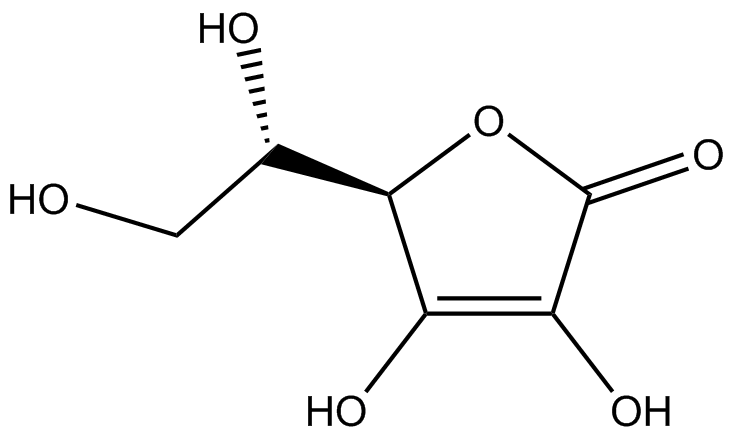
L-Ascorbic acid is a vitamin and antioxidant that are often supplemented to plant tissue culture media to inhibit tissue browning.
Synonyms: 3-oxo-L-gulofuranolactone; Vitamin C

A106 L-Ascorbic Acid
| Synonyms: | 3-Oxo-L-gulofuranolactone, Vitamin C |
| CAS: | 50-81-7 |
| Formula: | C6H8O6 |
| Mol. Weight: | 176.13 |
Properties
| Form: | Powder |
| Appearance: | White Crystalline |
| Application: | Antioxidant; Vitamin |
| Solubility: | Water |
| Typical Working Concentration: | Varies with application, should be determined by end user. |
| Storage Temp: | Room Temperature |
| Other Notes: | Plant Tissue Culture Tested. Heat-sensitive, do not autoclave. |
Application Notes
Commonly used to overcome browning of tissues in plant tissue culture.
References
Banerjee N & Langhe E (1985) A tissue culture technique for rapid clonal propagation and storage under minimal growth conditions of Musa (banana and plantain). Plant Cell Reports, 4(6), 351-354.
Joy Iv R.W., Patel K.R. & Thorpe T.A. (1988) Ascorbic acid enhancement of organogenesis in tobacco. Plant Cell Tissue Organ Cult. 13, 219-228.
Ko, W. H., Su, C. C., Chen, C. L., & Chao, C. P. (2009). Control of lethal browning of tissue culture plantlets of Cavendish banana cv. Formosana with ascorbic acid. Plant Cell, Tissue and Organ Culture, 96(2), 137-141.
Stasolla, C., & Yeung, E. C. (1999). Ascorbic acid improves conversion of white spruce somatic embryos. In Vitro Cellular & Developmental Biology-Plant, 35(4), 316-319. Merck 13, 837.
| Formula (mg/L) | |
|---|---|
| Boric Acid | 143 |
| Calcium Chloride Anhydrous | 1359 |
| Citric Acid, Anhydrous | 300 |
| Cobalt Nitrate·6H2O | 2.45 |
| Cupric Sulfate∙5H2O | 3.95 |
| Ferric Ammonium Citrate | 300 |
| Magnesium Sulfate∙7H2O | 3750 |
| Manganese Chloride∙4H2O | 90.5 |
| Na2∙Mg∙EDTA | 50 |
| Potassium Phosphate dibasic | 2000 |
| Sodium Carbonate Anhydrous | 1000 |
| Sodium Molybdate∙2H2O | 19.5 |
| Sodium Nitrate | 75000 |
| Zinc Sulfate*7H2O | 0.222 |